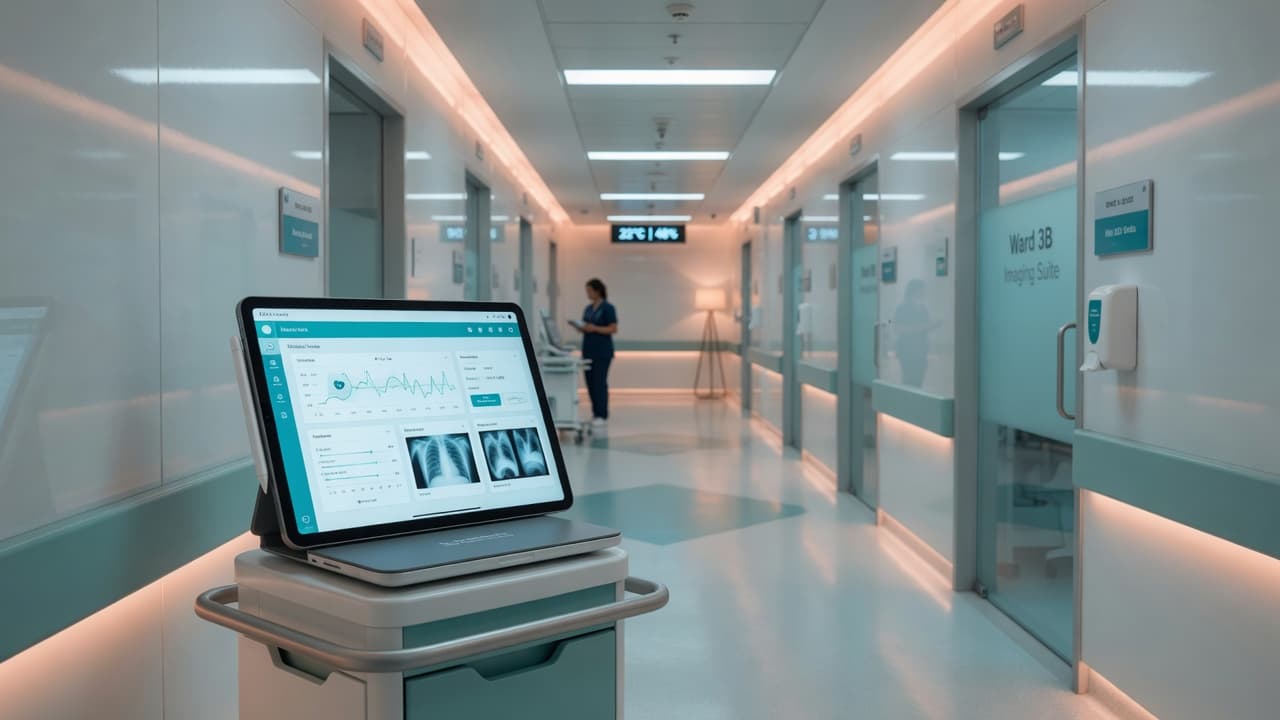

AI in healthcare has moved past the hype cycle into practical, measurable use. Hospitals that invested early in data infrastructure are now applying analytics to real clinical and operational decisions — not pilot slides.
The difference between “we tried AI” and “AI improved outcomes” almost always comes down to data quality, governance, and workflow fit.
Predictive readmission risk
Models trained on historical admissions, diagnoses, medications, and social determinants can flag high readmission-risk patients before discharge.
Care teams then intervene with targeted follow-up, medication reconciliation, and outpatient coordination. The win is not the model score — it is the earlier, structured clinical response.
Smarter staffing and capacity planning
Predictive analytics on patient volume, acuity, and seasonal patterns help administrators plan staffing more accurately.
That reduces both overtime spikes and idle capacity. Over time, hospitals build a feedback loop: forecast → roster → outcome measurement → model refinement.
Diagnostics support — assist, don’t replace
Computer vision and decision-support tools are increasingly used as a second set of eyes in radiology, pathology, and triage workflows.
The responsible pattern is clear: AI flags anomalies for clinician review; clinicians retain accountability. Governance, audit trails, and bias monitoring should be designed in from day one.
Operational intelligence beyond the bedside
High-performing health systems also use analytics for:
- Length-of-stay forecasting and bed management
- Supply utilization and pharmacy inventory
- Revenue-cycle leakage detection
- Quality and compliance dashboards for leadership
The foundation that makes it possible
None of this works without a solid data foundation:
- Interoperable clinical data (HL7/FHIR-ready HIS and interfaces)
- Cloud or hybrid data platforms with clear ownership
- Access control and auditability for regulated environments
- MLOps discipline so models stay monitored after go-live
Hospitals investing in HIS modernization and governed data platforms today are the ones positioned to benefit from AI tomorrow.
Practical starting points
If you are early in the journey, prioritize:
- One high-value use case with clear owners and metrics
- Clean historical data for that use case only
- Clinical + IT co-design of the workflow
- A 90-day pilot with success criteria defined upfront
Key takeaway
The hospitals seeing real returns from AI are not chasing the newest model. They are the ones that got the data foundation, governance, and clinical workflow right first.
If you want a structured readiness assessment for AI in your hospital network, our healthcare and analytics teams can help map use cases, data gaps, and a phased delivery plan.